You now know why you get pain from fascia, how it becomes tight, and what problems it can cause you. If you don’t know, then you haven’t read Part 1 and Part 2.
Loosen Up
There are several general things you can do to prevent and help heal fascia pain. Remember your fascia can be tight all over your body. Even if one area is not the cause of the pain, it will still need attention. Start doing some of these things and be on your way to a pain free life! First thing you need to do is to check out The Ultimate Self Massage Guide and learn how to address your fascia pain at home.
- Foam Roll- breaks down adhesions in the tissue, targets trigger points, gives a greater stretch through isolated areas and basically goes a long way to getting your fascia loose and healthy!
- Tennis Ball Work– Gets right into your muscles, and consequently your fascia. Is great for the plantar fascia.
- Stretch-Almost doesn’t need to be said. Although stretching is not as effective as soft tissue work for fascia, it is a supplement and needs to be done along with the two practices above.
- Biomechanical Corrections
- Repeat Strain- For eg. If you are sitting all day, your hip flexors will be tight, and you will get tight fascia through your front. This is the same with all repetitive movements, as I have mentioned previously, fascia can and will adapt.
- Footwear- Foot biomechanics affect your whole body, get them checked out.
- Technique- Very similar to repeat strain. If you are lifting and strength training, or even running or walking badly, you are going to cause abnormal stresses through your body and consequently get tight. Correct technique will help prevent and cure tight fascia. Simple exercises will help you correct that.
Heal Plantar Fasciitis And Tight Feet
Whether you have plantar fasciitis or you are just tight, you need to do some work through your feet. Tight fascia in your feet causes much more than just plantar faciitis, as you learnt in Part 1 and Part 2. Here are a few things you can do to get that plank of wood underneath your foot somewhat pliable again.
Soft Tissue Work
Soft tissue work is the number one thing you can do to ease your pain. Fascia is pretty thick. Soft tissue work puts extra force right through where you want it.
Do some tennis ball work through your
- Plantar Fascia

- Peroneals
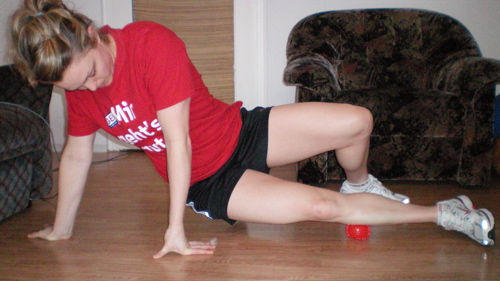
- Calves
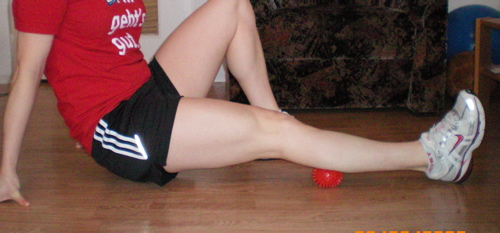
Working with the tennis ball on the actual plantar fascia is simply the first and foremost thing you need to be doing. If you are a real sucker for pain, switch to a golf ball!
Foam Roll your
- Peroneals
- Calves
Stretch
Stretching is easy and necessary for fascial pain relief. Although not as effective as soft tissue work, it needs to be done. When you are trying to cure plantar fasciitis or loosen it up, you need to work through your:
- Gastrocnemius
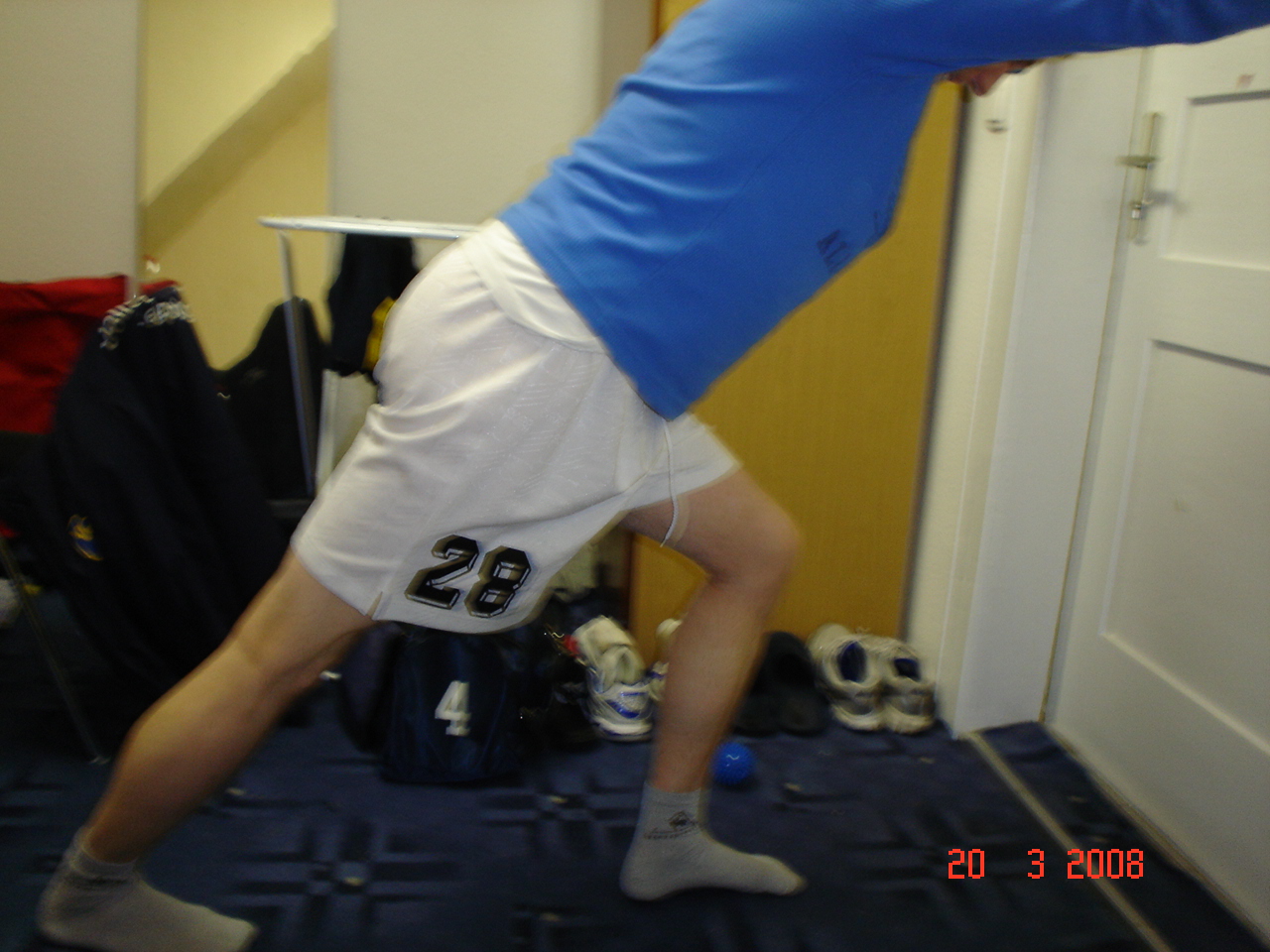
- Soleus

- Plantar Fascia
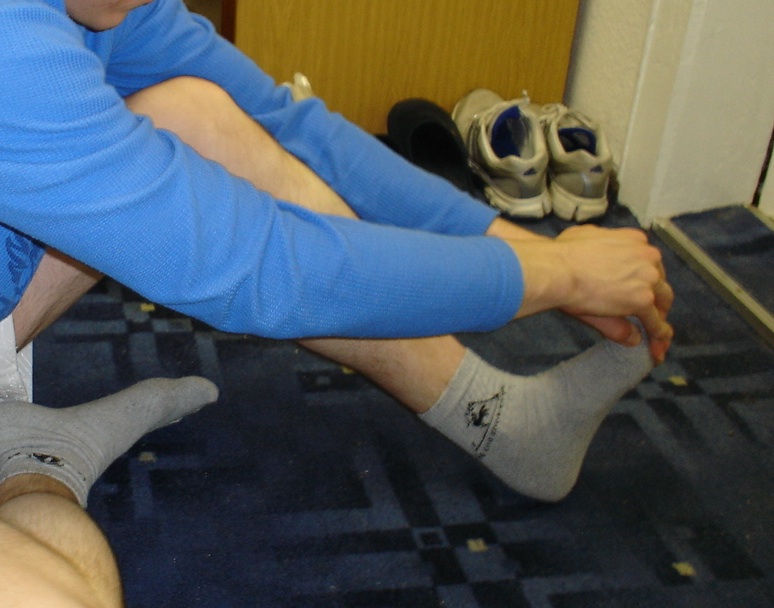
Plantar Fascia has a direct influence on these two muscles and loosening them up will go a long way to relieving pain and stiffness.
Biomechanical Corrections
A big cause of plantar fasciitis is a dropping arch. See a specialist to find out if you require arch support. Often this simple biomechanical correction will fix the problem, or at least stop it getting worse.
Ice
Plantar Fasciitis is an inflammatory problem. Ice will help.
Get Started and Get Loose
From this series you can understand the role of fascia and how it impacts on your body’s function. Tight fascia can wreak havoc on your body, bind you up, make your muscles tight, and cause you pain. The feet are the main issue in many people, and where much of the problems start. Get them loose and functioning correctly, but also don’t neglect the rest of the fascia. Repetitive movements during the day will leave certain parts of your fascia tighter than others. Start employing these techniques within your workout plan and start to feel the benefits. Your fascia won’t get loose by itself!
Part 1: An Important Piece Of The Pain Puzzle
jdurando says
Lauren –
I love the information and presentation on the site, triggerpoint work, foam rolling and the like is phenomenal stuff when we can understand the hows and whys to use it, you make it very easy to understand those points.
Many thanks for your excellent work.
Lauren says
Thanks! That’s my aim, to explain and make people understand concepts.
Cheers.
Lady G says
I am going to find a tennis ball right now!
Now that I actually understand how it works, I’m much more motivated to do something with my plantar fascia. Thank you!
Jamie Atlas Fitness Blogger says
Hey Lauren – great great post! You are right on the money with Fascia being an important part of the equation that can affect the rest of the body.
There is a lot of new research coming out that links the acupuncture points of the body to different lines of fascia (which goes a long way to explaining why that stuff works so well).
I was lucky enough to have dinner with Thomas Myers (the author of Fascia Trains – new book comes out end of this year and is going to be awesome!) and he was talking about how interconnected everything is and how totally ignored fascia is – really important that anyone exercising has at least an awareness of what fascia is and how crucial it is to respect what it can do for us.
By the way, how long do you think those stretches should be held to really access the fascia? Or would that be just until I can’t stand the tears of pain anymore? 😉
Cheers Lauren
Jamie
Lauren says
Hey Jamie,
I will be getting that book when it comes out. I would hold them until you start to feel a release, probably at least 20 seconds.
Cheers
Michelle says
Thank you for this information. I’ve been dealing with muscles pain for years, but finally happened across the idea that my fascia may be causing the whole right side to ache with pain.
Cindy says
Thaank u Jamie! Mmusic to my ears. No wonder when I stop working out evrythings starrs again.The pain had gotten so bad, I wanted to die. I will try all of the above
all my best
cgc
Berry Seier says
I am a 75 year old female and pretty darn feeble. The foam roll would be too difficult for me to do sinc I’m at the “I’ve fallen and can’t get up” stage. Of course I can stretch and have ordered a QI Gong for seniors video, done mostly sitting down. Can you recommend any nutritional products. Also have been told myofascial r elease therapy is good and acupuncture. Of course my insurance doesn’t pay for any of this, but that’s the story of my life! I have just learned I hve this, probabaly caused by sitting too much.
Beth Johnson says
Lauren,
I believe I have a fascia issue in my elbow. I think it started when I changed the set up of my keyboard at work. Is stretching my best bet for treatment? It’s been a couple of months; do I need to go to a doctor? I haven’t tried heat, but ice makes it worse.
Thanks!
Lauren says
Tr some self massage surrounding the area, but head to a specialist if the pain persists. Once you have a diagnosis I can help you with the treatment.
Tracy a says
I have compartment Syndrome in both my calves Ive had surgery on my left leg and found out I have more on that leg and now also have it on my right leg, I went to a massage therapist and he said to massage and stretch, The pressure in my legs are really high and its hard to deal with, what do you suggest? Thankyou tracy
Lauren says
Hey Tracy,
I would suggest taking a look at my tennis ball articles and have a crack at the calf massage. Mssage nd stretching should help a lot, try ice massage as well. Block of ice up and down the leg.
End of the day if it is not released manually it can be done through surgery, however your therapist should be able to help release your fascia manually….
Hope that helps
Lauren
jen reidy says
Thank you for your incredibly informative article! The best I’ve read thus far.
I’ve had an MRI for my 2 herniated disks, and been doing PT 2x day, accupressure and icing — in addition to seeing a rehab doctor.
I went from having my entire body inflamed – the epicenter being at the outer knee intersection – and now I have a constant “heavy” feeling on my outer hamstring and depending on how much I move, pain.
It’s been 6 months of pain and a very slow and painful process.
My doctor feels by doing the foam roller I’m re-tearing the fascia so I’ve stopped doing that and I’m taking a TON of Advil (not a good plan long-term I realize).
My PT belives I have an inflamed SI joint- 6 months though?!
A few Qs:
How long does the healing normally take?
Accupuncture – a good idea or …?
Cortisone injection by the SI joint – could this help since they run close to each other?
Thanks in advance for your feedback,
Jen
Lauren says
Hey Jen I try to stay away from cortisone for as long as you can. What other strength work are you doing?
Acupuncture is great yes, you should try it, it seems you have nothing to lose. Herniated discs take a while but not that long. I would re evaluate the exercises and corrective stuff you are doing.
Tami Willmann says
I was dx’d w FMS/MPS complex over 20 yrs ago. The MPS has largely been ignored by myself & my drs, until today. Having read your articles (1-3) I am convinced that FMS may not be an issue at all, rather, MPS may be the cause of years of pain. I have had recurring plantar fasciitis. Oddly, I am extremely flexible in my legs-even more than any person of my age and weight should be. My biggest issues are in my back, and today, while looking at pics of the back muscles to show my husband exactly where it hurt so he knew where to massage. I was shocked to see that MOST of my issues are in direct correlation with the larger areas of fascia. I’m not entirely sure what this means, it doesn’t make sense–the extreme flexibility in the legs with pain in my feet, with severe lack of flexibility/mobility in my torso, giant lumps (more than just your average ‘knot’ in some areas on my back, etc. Recently (within the last year) I’ve also started having what I believed was nerve pain in my back (I have it in my feet–dx’d by dr), but now I wonder if that too could be associated with the fascia–if my nerves are being strangled by the lumps and knots or something. So, anyway, I just wanted to tell you that I really, really appreciate your articles. I know they are not designed to dx or treat, but they DID help me to consider something new–and w/a dx that offers no hope, I can only try to find hope by gathering new information for myself. One of the questions I was curious about was if you believe that dehydration, or partial dehydration could lead to fascia issues. And also, can you possibly share some additional sites where I could learn more about treatment, symptoms, etc. about the fascia issues. I’m so hopeful. Thanks!
Tami Willmann says
I was dx’d w FMS/MPS complex over 20 yrs ago. The MPS has largely been ignored by myself & my drs, until today. Having read your articles (1-3) I am convinced that FMS may not be an issue at all, rather, MPS may be the cause of years of pain. I have had recurring plantar fasciitis. Oddly, I am extremely flexible in my legs-even more than any person of my age and weight should be. My biggest issues are in my back, and today, while looking at pics of the back muscles to show my husband exactly where it hurt so he knew where to massage. I was shocked to see that MOST of my issues are in direct correlation with the larger areas of fascia. I’m not entirely sure what this means, it doesn’t make sense–the extreme flexibility in the legs with pain in my feet, with severe lack of flexibility/mobility in my torso, giant lumps (more than just your average ‘knot’ in some areas on my back, etc. Recently (within the last year) I’ve also started having what I believed was nerve pain in my back (I have it in my feet–dx’d by dr), but now I wonder if that too could be associated with the fascia–if my nerves are being strangled by the lumps and knots or something. So, anyway, I just wanted to tell you that I really, really appreciate your articles. I know they are not designed to dx or treat, but they DID help me to consider something new–and w/a dx that offers no hope, I can only try to find hope by gathering new information for myself. One of the questions I was curious about was if you believe that dehydration, or partial dehydration could lead to fascia issues. And also, can you possibly share some additional sites where I could learn more about treatment, symptoms, etc. about the fascia issues. I’m so hopeful. Thanks!
Lauren says
Hey! I’m glad this could help you a little…yes I have heard that dehydration can lead to fascia issues, it’s a contributor. Lets me research a bit more and I’ll send you an email.
alex says
hi lauren,
I wonder if you could recommend a technique to help stretching my abdominal fascia that feels quite tight following surgery. I think there is scar tissue but since is along the bikini line I am not sure how to intervene.
Thanks
Lauren says
This is incredibly late and I apologise, I completely missed this comment. I would suggest using a tennis ball on the area.
Zephyr Johnson says
I have been dx’ed with rsds and fm for many years. But what is means to me is PAIN. I have had some kind of pain somewhere on my body since 1996. I thank you for your knowledge and this information. I now have a better understanding as to how the fascia works and why I experience some of my pain in places that have made no sense to me. I when dancing not to long ago, my feet were killing me when I got home and later my thighs were on fire with pain. Connection you think? Now I get it. I need to stretch more and drink more water to start. Thanks again, more too think about and more to do.
c
Lauren says
Connection for sure. Apologies for the late reply, how’s the pain now?
Tami says
Thank you for taking the time to write such an important article. I was dx’d with fms/mps complex almost 20 yrs ago, and didn’t know a thing about the importance of the fascia until about 5 yrs ago, when I began suffering from plantar fascitis. Once I started the excercises, I couldn’t believe the differences in my entire body, and the continued changes have really freed up and released a great deal of the pain that I’ve suffered for many years. When I tell people about the fascia, I’m always surprised to find that they’ve never heard of it–but then again, I didn’t know till I had an issue with my feet, and I thank God for THAT…it has made a difference like you wouldn’t imagine. So I appreciate that you wrote the article, as so many folks need to know the truth about this serious issue.
Lauren says
Thanks for the comment Tami! I’m glad you have everything under control now.
Susan land says
I have abdominal and pelvic pain on left side. Can tight fascia cause this? I have no discomfort on the right side. I feel pressure pulling and bloating on left side.
Please email me and let me know.
Thanks
Susie
Marsha Gordon says
My husband has problems with his L2-L5. We have been doing PT and found he has tightness in his fascia in his calves and his back. he therapist has been using a technique of grabbing his skin and raising it up and applying a pound of force to loosen the fascia. She does this on his back as well. It is a very painful technique. She just recently quit her job to go into business for herself so we will no longer be able to use her since she does not accept our insurance. When we mentioned the problem of his tight fascia his orthopedic doctor aid he never heard of it. Now that I read some of your blog I see you do believe in it. Is thee a way to get a book that would help his back and leg problem. We do not have a way to use the e-books. We have a Mac book Pro. My husband cannot get down on the floor are there any chair exercises he could do or ones laying on a bed. He has difficulty standing still(pain gets worse, even if he shifts his weight). He is getting an epidural next Thursday. Hope you can help. Also have my husband on a diet and so far has lost 10 pounds.
Larry Gordon says
Above it says you can get your book Ultimate Self Massage Guide for $9.95. Is there a way to get it mailed in book form since I do not have an e-book reader only a Mac Book Pro and do not know how do download it . Can it be downloaded to a Mac Book Pro? When you click on the $9.95 price it does not tell you about the $9.95 price only $19.95 price. How could I get the $9.95 price?
Lauren says
Larry send me an email on lauren@laurensfitness.com I’ll sort it out for you
Dalva Brando says
Hi Lauren,
Thank you for your time and great post,much appreciated.
I have been having a long journey and so far do not exactly what I have,but thinking something about with the fascia.I work out at the gym and I overworked my legs and gluteus.For while having lost of pain in my legs and butt.Not having pain anymore,but soreness.I feel terribly bad because I have no muscle tissue whatsoever in my butt and my legs very lean.It does not matter at all if I workout to gain muscles;the more I workout the leaner I get.I tried acupuncture points,electrical stimulation,rolfing,foam rolling,tennis ball,stretches.No positive results from all those.What else can I do to help my condition.Your input will be very much appreciated.Thanks a lot.
Wish you the best .
Thanks again.
Kimberly COhen says
Good Morning,
I get three specific knots in my hip. These fascia knots continuously return. I currently use a roller, massage therapy and heat. Any other suggestions to assist in relieving this pain. I tried the injections I get relief for about 2 weeks then they return.
Thanks for your great articles!
Kim