If you suffer from back or neck pain, from constant shoulder pain, slump over when you walk and sit, and have trouble keeping your chest up and out while you are lifting, there is a fair chance that you have poor thoracic mobility. Although this is now a problem that many more people are aware of, it is, in relative terms, a pretty recent finding. Unfortunately, the nature of our lives currently almost forces us into a bad posture. You do something for long enough, it’s going to stick. Thoracic spine immobility is a common cause, or at least contribute to a lot of different pains above and below it. You need to be mobile through that area for your body to move the way it needs too.
Why Do You Need Thoracic Spine Mobility?
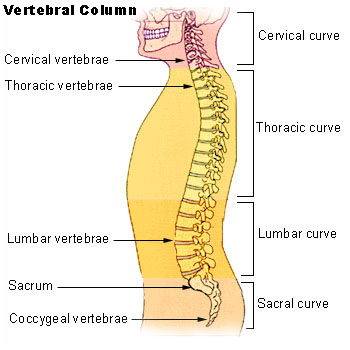 Firstly, it is necessary to understand where the thoracic spine actually is and what it should be doing. Check out the picture, and you will see that the thoracic spine is basically your upper back. To put it simply, you want to have stability in your lower back, and you want to have mobility in your upper back. The thoracic spine is made to rotate, to extend, and to flex. It is supposed to be mobile, and it is where you should be getting a lot of your movements from. Unfortunately, a lot of people get that mobility form their lower back, where stability is they key. This is why poor thoracic spine mobility can lead to lower back pain. You can get lower back pain relief from getting better thoracic mobility. Your biomechanics are bad, you get imbalances down the chain, one thing leads to another.
The problem is that everyone slumps when they sit down. A large percentage of us have bad posture in daily life. It’s not something that a lot of us even notice, however there is no doubt that having a mobile upper back will make a lot of difference to your posture and pain levels. We spoke about how bad thoracic mobility affects the lumbar spine, similarly it also affects above it, the shoulder. A lot of shoulder pain and upper back muscle pain is caused by immobility of the upper back. Your scapula will not be able to move properly, and the sub-acromial space will be reduced (where a lot of the tendons and muscles run through) and rotator cuff injuries are a common side effects. Shoulder impingement and pinched nerve in shoulder is often a result. With better thoracic mobility, you will get better shoulder mobility.
How Do You Get Better Thoracic Spine Mobility?
Check out this video to see how to test and get some more thoracic mobility using soft tissue modalities.
If you want a more thorough routine check out strong lifts where mehdi shows you a range of stretches and exercises as well. For more stuff with the tennis ball check out tennis ball therapy.
You really will feel a benefit from an increased thoracic mobility. Try the test and the exercises and get more mobile.
Joe says
Very interesting article. I’m going to incorporate some thoracic mobility work on my rest days. My hamstring flexibility is very poor I can’t touch my toes, what would you recommend for that?
Chris Melton says
So few people realize the impact that a lack of thoracic has on almost every aspect of our lives. As you note, poor posture and long hours hunched in front of the tv or computer don’t help either.
Thanks for a couple of great remedies.