There is a fine line between getting the most out of your training and overtraining. To improve your performance in anything, you have to work hard and push your limits. However, you have to find the right balance between getting the most out of yourself and breaking down. The improvements that will occur in your body, occur in your rest periods. It is when you allow your body to adapt. Managing training loads is important and will ensure that you keep yourself from over training.
It is much easier to understand the concept from these two diagrams. The first one will show that if you keep training at a high level, without the appropriate recovery your performance will eventually diminish. Find out more about sports recovery. The second shows hat with appropriate recovery you will be able to super compensate, which mans get the gains and adaptations that you have been working for. Below is a basic summary of over training, taken from scientific resources.
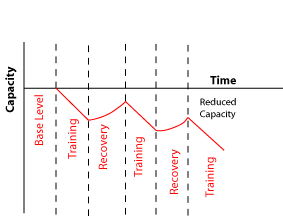
negative training
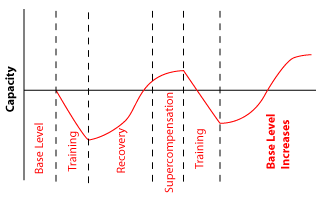
progressive training
Overtraining Overview
- It’s a general assumption that athletes must have a high volume of intensive training in order to reach performance capacity.
- Therefore they are often balancing a fine edge between the optimal amount of training and overtraining.
What is it?
- Many studies investigating the effects of overreaching and the numerous variables it effects.
- However, as it is not ethical to induce a state of over training (considered a severe syndrome) little studies have examined it.
- Caused by total stress…stress can occur from training, illness or psychological stress.
- Many proposed theories about cause.
Overreaching & Overtraining
- Overreaching is used by athletes to enhance performance.
- Super compensation effect with adequate recovery.
- If signs recognised recovery takes 2 weeks
- Normal and harmless state.
- Over training is the process of excessive training, which when combined with inadequate rest can lead to pathological under performance. AKA Under performance Syndrome (doesn’t imply causation)
- Thought that symptoms of over training are similar yet more advanced then overreaching
- Little Scientific Evidence!!!
Factors Contributing to Overtraining
- Frequent competition
- Prolonged intense training- lack of periodisation
- Monotonous training
- Psychosocial stressors
- Illness
- Heavy traveling/jet lag
- Nutritional deficiencies
- Infectious disease
- Allergic reactions
Diagnosis of Overtraining
- “Exclusion of other sources of underperforming and persistence of performance impairment after more than 2 weeks of relative or complete rest.” Hawley et al. (2003)
- In order to diagnose overtraining athlete history, and laboratory testing may be required.
- Diagnostic tools can be inexpensive, allow early diagnosis, avoid disruptions to training and be practical.
- Prevention and Diagnosis similar
Diagnosis
- If you suspect the athlete may be over trained, having these to look at will assist in diagnosis
- Monitor training volume and intensity- RPE, training and wellness logs
- Sleep quality
- Stress levels
- Fatigue
- Muscle soreness
- Resting HR
- Psychological factors
- POMS
Here are the common markers of overtraining
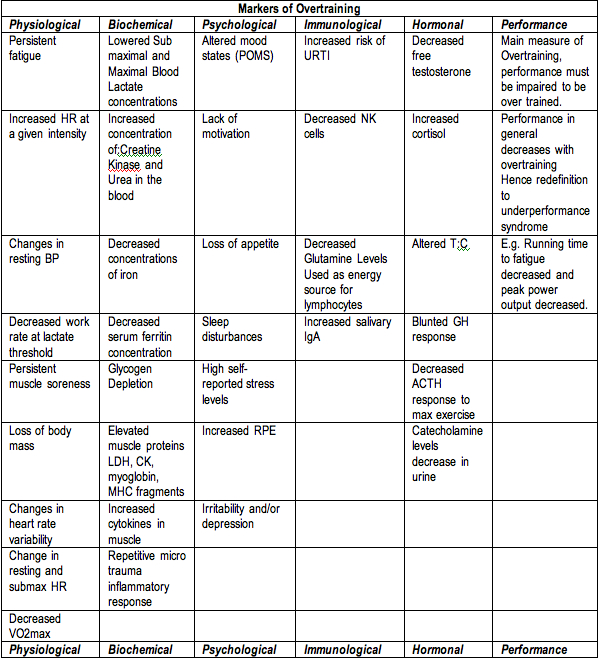
common markers of over-training
RPE – Ratings of Perceived Exertion
- Self- monitor athlete awareness
- Good measure of intensity, studies correlate
- to HR and Blood Lactate
- Most sensitive instrument
- available and Easy to administer
- Load= Time(min)*RPE(1-10)
- Monotony= Average Load/SD of load, Monotony above 1, consider rest day or decrease intensity
- Strain= Load*Monotony
- Been shown to be linked to overtraining and illness in athletes when monotonous training is combined with high training loads
Diagnosis: Laboratory Testing
- Blood test
- Creatine Kinase
- Urea
- Ammonia
- Uric acid
- Decreased nocturnal urinary catecholamine
- Decreased T:C
- HR variability
- VO2 max
- Stress test- 10% above anaerobic threshold
- 1RM
- max blood lactate
- submax blood lactate
- max HR
- RER
- Hormonal changes during exercise
- Problems:
-Require standardized conditions- expensive
-Require 2 days no training and dietary control for validity
-Need baseline data
Misdiagnosis?
- Overtraining or simply fatigue?
- I.e jetlagged…not over trained!
- Poor diet etc.
- Illness?
Treatment
- Must continue monitoring with diagnosis strategies!
- ‘Prevention is the best treatment for overtraining’ (Uusitalo, 2001)
- REST…Relative Rest
- Sleep, Nutrition & Hydration
- Relaxation
- Stretching & Active Rest
- Time frame
- Overreaching- 2 weeks with super compensation
- Overtraining- months-years depending upon individual.
Prevention
- Identify susceptible athletes
- Type 1 personalities
- Periodisation of training is the key
- Avoid sudden increases in training load
- Ensure adequate recovery
- Same principles as Diagnosing
- MONITOR!
[…] You have to weigh up what you get out of it, opposed to the energy you are consuming. Pasta, as you can see above, is a food high in calories, especially for the nutrients you get out of it. This is good and bad, depending who you are. If you are part of a very small percentage of the population, who is a professional endurance athlete, trains twice a day or participates in a hugely ridiculous amount of exercise, then this is a great thing. Energy above and beyond is a must. You need energy to train, and not having enough can cause a wide variety of problems. In saying that, you can still get your calories from sources with more nutrients. For example, I train twice a day, but am involved in a power sport. I need more energy than the average person, but I still have to be careful. I don’t eat pasta, and get most of my carbs and energy from proteins, legumes and veggies… and a lot of them at that. On the other hand, a male long distance runner will burn an enormous amount of calories, and will simply need to top them up however he can get them, this is very important for sports recovery and will help to avoid overtraining in sport. […]