The piriformis test is used to detect piriformis syndrome. This is when the sciatic nerve is compressed or irritated by the piriformis muscle. It is a neuromuscular disorder and it causes pain, tingling and numbness of the thigh and leg.
How Does Piriformis Syndrome Occur?
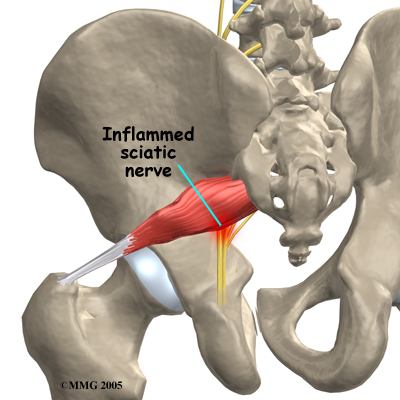
The piriformis muscle lies deep to the gluteal muscles, and the sciatic nerve passes underneath it. In about 15% of the population it will pass through the muscle. The pain is usually in the bum, hamstring, or back of the leg. This is why it is frequently misdiagnosed glute med dysfunction, bulging disc, sciatica, stress fractures and other musckuloskeletal problems. When the piriformis gets tight or spasms it can irritate and even compress the sciatic nerve, causing pain and numbness in various places down the back of the leg.
Anatomy Of The Piriformis
pramilahomoeoclinic.com
These factors may also contribute to a tightening of the piriformis:
- Weak abductors
- Tight adductors
- Tight ITB
- Limb length difference
- Tight medial hamstrings
- Foot pronation
- Overstriding
- Exercise on hard surfaces & uneven ground
- Sitting for long periods
How Do I Perform The Piriformis Test?
This video takes you step by step through a basic piriformis test that you can do at home. If you feel pain, it is a positive.
Treating Piriformis Syndrome
Treatment of piriformis syndrome is quite difficult and is usualy taken in a step by step approach, including these modalities.
- Physical therapy: stretching and strengthening of the hip rotator muscles. Stretching the hip flexors and hamstrings will also help relieve pain.
- Rest: Stop doing what aggravates the pain.
- Anti-inflammatory medication: Can help to decrease inflammation in the area.
- Massage: Will help to release the tightness in the piriformis. It is difficult to reach and it requires deep massage.
Piriformis syndrome is a painful condition that strikes a lot of people. it is often masked as other conditions and it is important that you correctly diagnose it. The self test provided will help you identify if this is the problem, so you can start adequate treatment.